
Humic acid has been getting more and more attention in recent years in the field of natural health promotion, and for good reason. This organic compound, which has been formed over millions of years through the decomposition of organic matter in the soil, can have a wide range of positive effects on our bodies. Modern medicine and nutrition researchers around the world are studying this natural „wonder substance”, which was a natural part of our ancestors' diets, but nowadays we can only get it into our bodies through conscious supplementation. Increasing environmental pressures, a diet low in processed foods and stressful lifestyles mean that there is a growing need for natural supports to help our bodies maintain balance and resilience.
What exactly is humic acid?
Humic acid is a group of complex organic compounds that occur naturally in soil, peat and aquatic sediments. Their molecular structure allows them to bind efficiently to minerals and heavy metals, a property that is key to their health effects. The formation of humic acid is the result of a long process: these valuable molecules are formed during the microbial breakdown of plant and animal residues and then „mature” in the soil over centuries, even millennia.
In fact, humic acid is not a single compound, but a complex mixture of molecules that share common structural characteristics. They contain aromatic rings, carboxyl, hydroxyl and ketoxy groups, which allow them to function in a very versatile way in biological systems. This complex structure explains why humic acid can exert a positive effect on several physiological processes simultaneously. The best quality humic acid preparations usually come from leonardite or special peat deposits where the humification process has taken place under optimal conditions over millions of years.

Effects on the intestinal tract
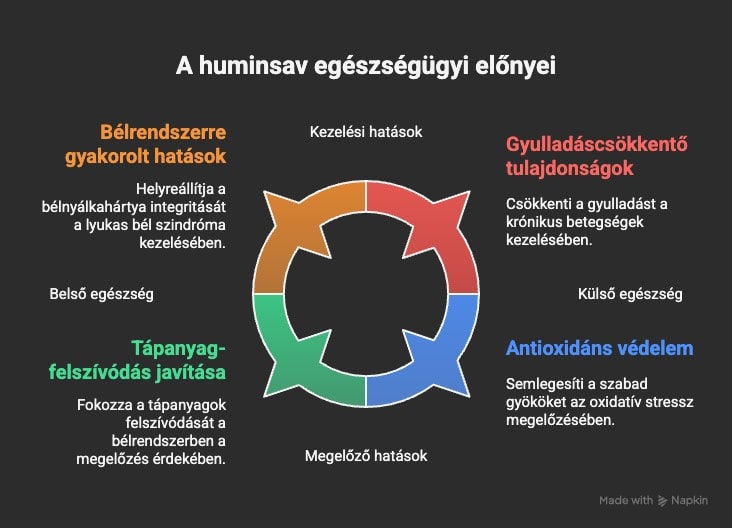
One of the most important health benefits of humic acid is its support for the intestinal tract. Research has shown that humic acid can help restore the integrity of the intestinal lining and reduce the permeability of the intestinal wall, which is key to preventing „leaky gut” syndrome. Stress from modern lifestyles, the use of NSAIDs, alcohol consumption and a diet rich in processed foods all contribute to damage to the intestinal wall, allowing partially broken down food components, toxins and pathogens to pass into the bloodstream.
A 2019 study by Schepetkin and colleagues showed that humic acid can modulate the composition of the gut flora, promoting the proliferation of beneficial bacteria while inhibiting the growth of harmful microorganisms. This is particularly important in treating gut flora imbalances resulting from modern lifestyles. Humic acid acts as a prebiotic, i.e. it provides nutrients for beneficial bacteria, while at the same time exerting an antimicrobial effect against pathogenic strains. Clinical observations have shown that regular use can improve digestion, reduce bloating, gas formation and gastrointestinal discomfort. It may also help restore the natural defence functions of the intestinal tract, which is particularly important after courses of antibiotics or in chronic intestinal diseases.
Anti-inflammatory properties
Humic acid has a significant anti-inflammatory effect. It has the ability to inhibit the production of certain inflammatory cytokines that are involved in the development of many chronic diseases. Research by Van Rensburg in 2015 found that humic acid supplementation can help reduce the intensity of joint inflammation and improve mobility in patients with arthritis. Inflammation is the underlying mechanism behind most chronic civilisation diseases, be it cardiovascular problems, metabolic syndrome, autoimmune diseases or neurodegenerative pathologies.
Humic acid can intervene in the inflammatory cascade at several points. It reduces the levels of interleukin-1, interleukin-6 and tumour necrosis factor-alpha (TNF-α), which are the most important proinflammatory signalling molecules. However, it is not a general immunosuppressant, but an immunomodulator - i.e. it helps to restore the natural balance of inflammatory and anti-inflammatory processes. Studies among athletes have shown that humic acid can reduce the intensity of muscle soreness after exercise and shorten recovery time. And patients with chronic inflammatory bowel disease have seen improvements in symptom severity and duration of remission.
Detoxification and heavy metal binding
Because of its molecular structure, humic acid is an excellent natural chelator, i.e. it can bind and remove heavy metals and toxins from the body. This property is particularly valuable in today's polluted environment, where we are exposed to lead, mercury and other harmful substances on a daily basis. Urban air pollution, processed foods, mercury accumulation in fish, heavy metal traces in drinking water, and even cosmetics and household products can contribute to toxin loads in our bodies.
Research has shown that humic acid can selectively bind to these harmful elements without depriving the body of essential minerals such as calcium, magnesium or zinc. This is extremely important because many commercially available detoxifying agents are not selective and remove vital minerals from the body in addition to harmful substances. The chemical structure of humic acid allows it to bind with high affinity to heavy metals and toxic compounds, while leaving essential elements free. In vitro studies have shown that humic acid effectively binds lead, cadmium, arsenic and mercury. And experiments in animal models have shown that humic acid administration significantly reduced the concentration of heavy metals accumulated in tissues, while essential element levels remained unchanged.
Strengthening the immune system
Humic acid also has an immunomodulating effect. It helps maintain the balance of the immune system - it does not overstimulate it, but it does not weaken it either. According to the results of a 2003 clinical trial by Joone and colleagues, regular intake of humic acid may enhance immune responses and support immune system functions. This is a particularly valuable property, as over-stimulation of the immune system can trigger autoimmune processes, while an inadequate immune response is associated with an increased risk of infection.
Humic acid supports the immune system on several levels. It enhances the activity of macrophages, which are the first line of immune defence and responsible for „engulfing” and destroying pathogens. Increases the activity of natural killer (NK) cells, which play a key role in recognising and destroying virus-infected and abnormal cells. It also helps the production of interferon, which plays an important role in the defence against viruses. Clinical observations have shown that people who regularly took humic acid had fewer colds and flu-like illnesses and, when they did develop, they were milder and recovered more quickly. Humic acid is also effective in supporting the immune system during times of chronic stress, sleep deprivation or intense physical exertion, when immune functions may naturally weaken.
Antioxidant protection
Humic acid has powerful antioxidant properties that help neutralise free radicals and reduce oxidative stress. This effect is particularly important in maintaining cellular health and slowing down the ageing process. Oxidative stress occurs when the amount of reactive oxygen radicals produced in the body exceeds the capacity of the antioxidant defence system. This process damages cell membranes, DNA and proteins, contributing to ageing and the development of many chronic diseases.
Research by Yamada and colleagues in 2011 showed that the antioxidant capacity of humic acid is comparable to other known antioxidants, but that humic acid has the advantage of being able to neutralise a much broader spectrum of different types of free radicals. Laboratory studies have shown that humic acid is effective in inhibiting lipid peroxidation, a major mechanism of cell membrane damage. And clinical studies have shown that regular supplementation with humic acid reduces levels of markers of oxidative stress in the blood. This is particularly important in conditions where the body is exposed to increased oxidative stress: intense physical activity, environmental pollution, smoking, excessive sunlight exposure or certain diseases. The antioxidant effect of humic acid may also contribute to maintaining skin health, protecting the cardiovascular system and supporting nervous system functions.
Improving nutrient absorption
Humic acid can increase the absorption of certain nutrients in the intestinal tract. It forms complexes with minerals that pass more easily through the intestinal wall, improving the utilisation of iron, zinc and other essential elements. This property is particularly important today, when many people struggle with hidden nutrient deficiencies despite eating seemingly adequate amounts of food. Due to modern agricultural practices, the nutrient content of food has declined significantly in recent decades, and depleted soils do not provide sufficient minerals for plants.
Humic acid improves nutrient utilisation through several mechanisms. First, it forms chelate complexes with minerals, which are more stable and more easily absorbed in the small intestine. On the other hand, it improves the permeability of the intestinal mucosa to useful nutrients while maintaining its protective function against harmful substances. Thirdly, it indirectly promotes better nutrient utilisation through positive modulation of the gut flora, as gut bacteria synthesise a number of vitamins and help to break down certain nutrients. Clinical trials have shown that humic acid supplementation improved response to iron deficiency anaemia therapy, with a faster rise in haemoglobin levels. Similar results were observed for zinc, magnesium and calcium. This may be of particular benefit to people with digestive problems, those following a vegetarian or vegan diet, or those of an age when nutrient absorption is naturally reduced.
Supporting energy production and mitochondrial function
Humic acid can also have a positive effect on cellular energy production, which takes place at the mitochondrial level. The mitochondrion is the „powerhouse” of the cell, where ATP, the universal energy carrier of cells, is produced. Many factors of modern lifestyle can impair mitochondrial function: oxidative stress, toxin exposure, inadequate nutrition and chronic inflammation. Humic acid protects the mitochondrial membranes from the damaging effects of free radicals through its antioxidant activity and also helps the electron transport chain to function properly.
Research has shown that humic acid can improve the use of oxygen in cells and increase the efficiency of energy production. This may explain why many people experience increased energy levels and reduced feelings of fatigue when taking humic acid regularly. Supporting mitochondrial health is particularly important in the ageing body, where a natural decline in mitochondrial function contributes to age-related energy depletion and many degenerative processes. In addition, athletes can also benefit from this effect, as enhanced mitochondrial performance can lead to improved endurance and faster recovery.
Cognitive functions and neuroprotection
Although research on this topic is still at an early stage, promising results suggest that humic acid may have positive effects on brain health and cognitive function. Optimisation of blood-brain barrier permeability, anti-inflammatory and antioxidant effects may all contribute to the protection of the nervous system. Nervous system inflammation, known as neuroinflammation, plays a central role in the development of many neurodegenerative diseases, including Alzheimer's, Parkinson's and multiple sclerosis.
Animal studies have shown that humic acid can reduce inflammatory markers in the central nervous system and attenuate neuronal death under certain damaging conditions. Humic acid is also thought to improve cerebral circulation, which is critical for proper oxygen and nutrient delivery. Some small human studies have shown that regular intake of humic acid has been associated with improved memory, concentration and overall mental clarity. These preliminary results suggest that humic acid may have a future role in supporting brain health and preventing cognitive decline, although further, larger-scale clinical trials are needed to confirm these effects.
Applications and dosage
Humic acid is available in capsule or powder form and is usually taken between meals with plenty of fluids. However, it is important to choose a quality product from a controlled source, free from contaminants. The quality of humic acid products can vary considerably depending on the origin, extraction method and purification process. The best quality products have a standardised humic acid content and have undergone third party laboratory testing to exclude heavy metals and other contaminants.
The recommended daily dose is usually between 200-500 mg, but this may vary depending on individual needs and the concentration of the specific product. It is recommended to start with a lower dose and gradually increase it to allow the body to adapt. Humic acid is best absorbed on an empty stomach, between meals, with plenty of water. Long-term use of humic acid is generally considered safe; some people may initially experience temporary digestive changes, usually a sign of a rearrangement of the gut flora, which resolve within a few days.
Summary
Humic acid is a remarkable natural compound that can provide a wide range of health support. From protecting the intestinal tract to detoxification and strengthening the immune system, it can have a positive effect in many areas. Although research is constantly expanding, existing scientific evidence supports the idea that humic acid can be a valuable addition to a health-conscious lifestyle. Humic acid is particularly valuable in that it not only targets a specific problem, but also provides complex, systemic support to the body, promoting optimal functioning of self-healing and self-regulatory mechanisms.
The challenges of the modern age - environmental toxins, stress, processed foods and inactive lifestyles - all take their toll on our bodies. Humic acid, as an ancient natural compound that our ancestors came into contact with naturally through food grown in pristine soil, can help restore this lost connection with nature. We can see it not as a miracle, but rather as a practical application of nature's wisdom: a tool to help our bodies cope with modern challenges and maintain optimal functioning.
Of course, it is advisable to consult a doctor or health professional before introducing any new supplement, especially if you have a chronic illness or are taking medication. Humic acid is not a substitute for a healthy lifestyle, a balanced diet or necessary medical treatment, but can be used as a complement to maintain health and improve well-being.
Sources:
- Winkler J, Ghosh S. „Therapeutic Potential of Fulvic Acid in Chronic Inflammatory Diseases and Diabetes” Journal of Diabetes Research, 2018
Link: https://doi.org/10.1155/2018/5391014 - Gandy JJ, et al. „Water intake: validity of population assessment and recommendations” European Journal of Nutrition, 2015
Link: https://doi.org/10.1007/s00394-015-0944-8 - Schepetkin IA, et al. „Immunomodulatory Activity of Humic Substances” Carbohydrate polymers, 2019
Link: https://doi.org/10.1016/j.carbpol.2018.09.010 - van Rensburg CE. „The Anti-inflammatory Properties of Humic Substances: A Mini Review” Inflammation & Allergy Drug Targets, 2015
Link: https://doi.org/10.2174/1871528114666150619094119 - Agarwal T, et al. „Fulvic acid induces apoptosis in FLG 29.1 cells through intrinsic and extrinsic pathways and G0/G1 cell cycle arrest” Chemico-Biological Interactions, 2007
Link: https://doi.org/10.1016/j.cbi.2007.06.038 - Joone GK, et al. „Investigation of the immunostimulatory properties of oxihumate” Journal of Nature Research C, 2003
Link: https://doi.org/10.1515/znc-2003-3-414 - Yamada P, et al. „Antiaging effects of humic acid” Phytotherapy Research, 2011
Link: https://doi.org/10.1002/ptr.3309
Huminexpert - The natural vitality

 HU
HU  SK
SK  EN
EN